
01 / The project
An enquiry is a data journey.
Mercury Construction Management (MCM) presents construction, engineering and fitout services to professional clients. Its website combines project information with a route to contact the company in English and Russian.
We updated the existing Drupal 7 website around the information visitors share: what they agree to, how enquiry attachments are handled and when external services load. The scope covered documents, form behaviour, consent records and optional analytics.
The work was delivered by ITHOUSE in October 2026. This case focuses on that update to the existing website.
02 / The project
Four documents, accessible in both languages.
We prepared and published a Privacy and Personal Data Policy, a separate Consent to Personal Data Processing, a Cookie and Analytics Policy and Website Terms of Use. Each document has Russian and English versions.
Visitors can reach the documents through a dedicated footer area. The enquiry form also links directly to the consent text and privacy policy, so the relevant information is available while a visitor decides whether to send a request.
Privacy and Personal Data Policy
How the website describes its use of personal data.
Consent to Personal Data Processing
A separate document linked from the enquiry form.
Cookie and Analytics Policy
Essential cookies and the optional analytics choice.
Website Terms of Use
The terms available to visitors of the website.
 View full screen ↗
03 / The project
Consent at the point of enquiry.
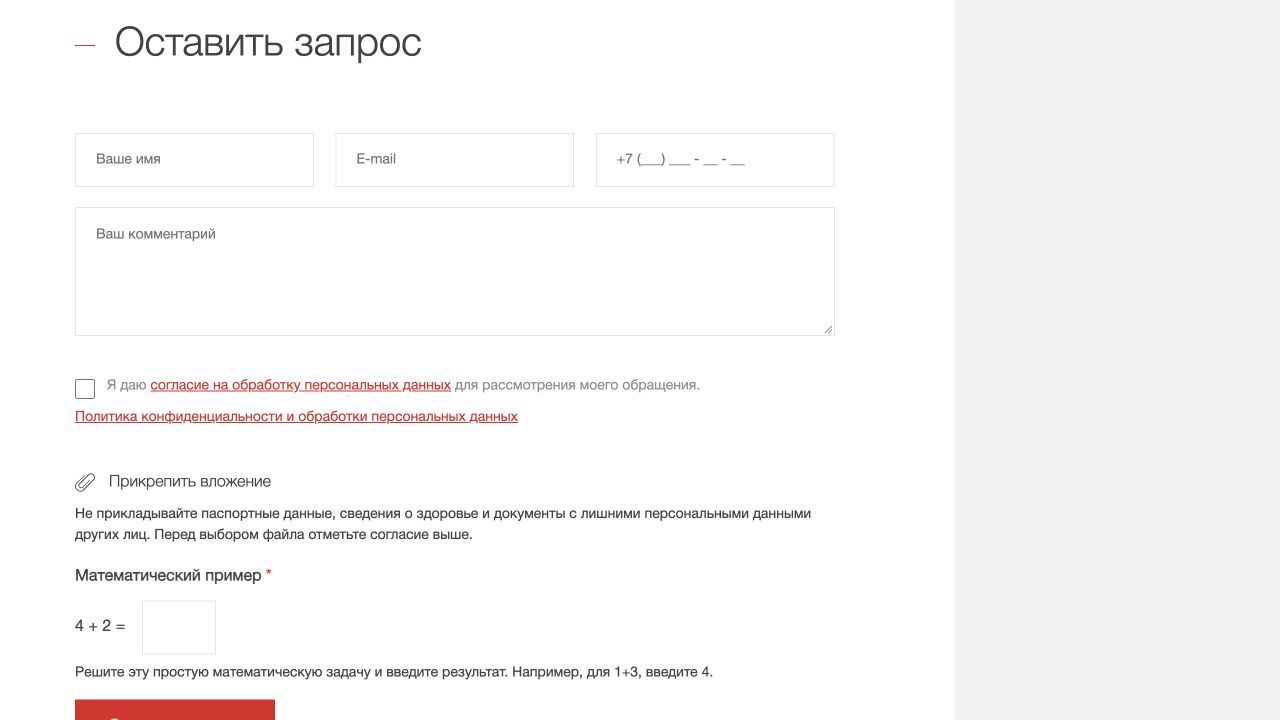
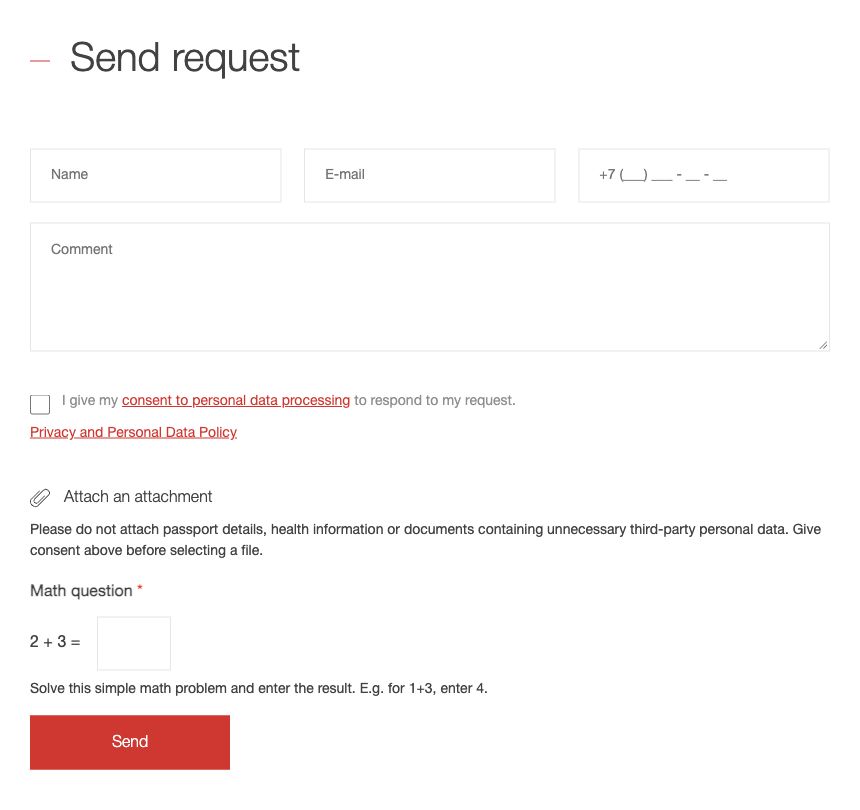
The enquiry forms ask visitors to make a deliberate choice. The personal data consent checkbox is required and starts unchecked. Its wording explains that the company will use the information to respond to the request.
The check runs on the server as well as in the interface. Requests without consent are rejected, and an outdated consent version requires the visitor to reload the page and review the current document.
The implementation records the document version and consent text with the submission. That preserves the wording associated with the visitor's choice instead of recording only a checkbox value.
 View full screen ↗
04 / The project
Attachments belong in private storage.
Enquiry files were moved from public access into Drupal's private storage while preserving the existing data. Anonymous access to those attachments is denied.
The upload flow is tied to personal data consent. Visitors must give consent before selecting a file, and the server also checks it before accepting an upload. A short notice asks visitors to avoid passport details, health information and unnecessary personal data about other people.
This connects the visible form instructions with the way the website handles the file behind the interface.
05 / The project
Analytics starts with a separate choice.
Analytics consent is separate from enquiry consent. Visitors can choose “Only necessary” or “Allow analytics”, and they can send an enquiry without agreeing to analytics.
Yandex Metrica loads after a visitor chooses to allow analytics. Session Replay is disabled. The footer's Cookie settings control lets visitors reopen the choice and change their preference.
The website remembers the selection together with its version. Withdrawing analytics consent stops the counter and reloads the page without the analytics script.
 View full screen ↗
06 / The project
The map opens when requested.
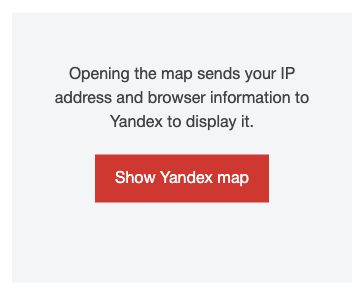
The contact page initially shows an explanation and a “Show Yandex map” button. The explanation tells visitors that opening the map sends their IP address and browser information to Yandex.
The external map loads after that button is pressed. Visitors can read the contact information and use the enquiry form while leaving the map unopened.
 View full screen ↗
07 / The project
The same choices in English and Russian.
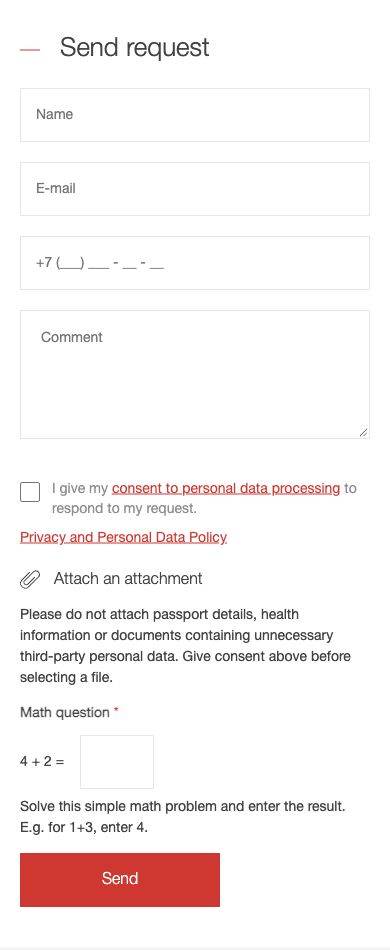
The documents, form wording, attachment notice, cookie controls and map explanation follow the selected language. The footer's website development credit is also localised and links to ITHOUSE.
The screenshots show the delivered interface on desktop and phone. Form fields are blank; the gallery contains public pages and implementation evidence, with no real enquiries or uploaded documents.
 View full screen ↗
08 / The project
Changes that work together.
The update connects four parts of the website: published information, an explicit form choice, server validation and private attachment handling. A custom Drupal module brings the document pages, consent records and visitor controls into the existing website.
Visitors can review the relevant information, send a request without analytics and decide whether to load the external map. The website records the consent wording associated with a submission and keeps enquiry attachments out of public access.
The result is a concrete improvement to how an established corporate website explains its choices and handles the information entrusted to it.
Four documents in English and Russian, linked at the relevant points.
The submission retains the version and wording of the consent document.
Attachments moved from public access, with existing data preserved.
Analytics and the map load after the relevant visitor choice.